# Fleet Maintenance Software: How Businesses Can Reduce Vehicle Costs and Improve Fleet Efficiency
Managing a fleet of vehicles is more than keeping cars and trucks on the road. Businesses need to control maintenance costs, track fuel expenses, monitor vehicle conditions, schedule preventive maintenance, and make sure every vehicle is being used efficiently.
For companies managing more than a few vehicles, spreadsheets and manual records can quickly become difficult to maintain.
This is where **fleet maintenance software** can help.
## What Is Fleet Maintenance Software?
Fleet maintenance software is a digital solution that helps businesses manage the maintenance, costs, inspections, and operational information of their vehicles from one centralized system.
Instead of keeping vehicle information across spreadsheets, invoices, emails, and paper records, businesses can organize important fleet data in one place.
A fleet management system can typically help businesses track:
* Vehicle information * Maintenance history * Preventive maintenance * Repair costs * Fuel expenses * Parts and equipment * Vehicle inspections * Drivers * Work orders * Vehicle assignments * Operating expenses * Budgets * Depreciation * Replacement planning
The goal is not simply to record information. The goal is to give businesses better visibility into their fleet and its costs.
## Why Fleet Maintenance Management Is Important
Vehicle maintenance can become a significant operating expense, especially for companies managing multiple vehicles.
Unexpected breakdowns can result in:
* Repair costs * Vehicle downtime * Delayed operations * Emergency maintenance * Lost productivity * Replacement vehicle costs
Preventive maintenance can help businesses identify maintenance requirements before they become more expensive problems.
For example, instead of waiting for a vehicle to experience a major mechanical issue, a company can schedule maintenance based on mileage, time, or predefined maintenance intervals.
This creates a more structured approach to fleet management.
## Common Fleet Management Challenges
Many businesses still manage fleet operations using spreadsheets or disconnected tools.
This can create several problems.
### 1. Maintenance Is Easy to Miss
When maintenance schedules are maintained manually, important service dates or mileage-based maintenance requirements can be overlooked.
A centralized system can help businesses track upcoming maintenance and create reminders.
### 2. Vehicle Costs Are Difficult to Track
A vehicle's real cost is not limited to its purchase price.
Businesses may spend money on:
* Fuel * Repairs * Spare parts * Tires * Insurance * Registration * Maintenance * Drivers * Other operating expenses
Without centralized records, it can be difficult to understand the total cost of owning and operating each vehicle.
### 3. Information Is Scattered
Vehicle information may exist in multiple spreadsheets, documents, invoices, and systems.
This makes it harder for managers to answer simple questions such as:
**How much did this vehicle cost the company during the last 12 months?**
A centralized fleet management platform makes this information easier to access.
### 4. Inspections May Be Inconsistent
Vehicle inspections are important for identifying issues before vehicles are used.
A digital inspection process can allow businesses to record:
* Inspection date * Vehicle * Checklist items * Passed or failed items * Failure reasons * Notes * Images
This creates a clearer history of vehicle condition.
## How Axpense Helps Businesses Manage Their Fleet
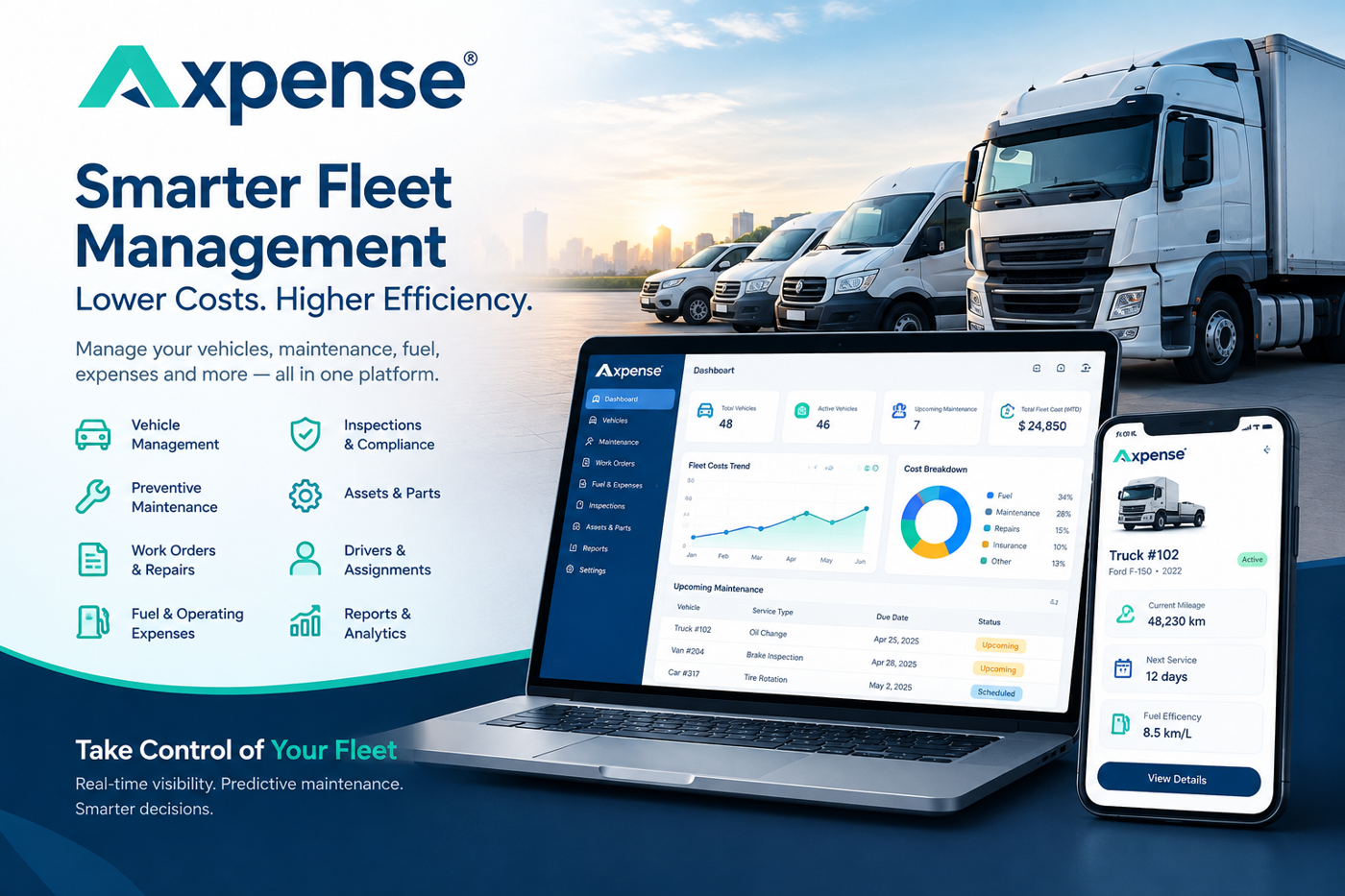
**Axpense** is designed to help businesses manage vehicle costs, maintenance, assets, and operational expenses from one platform.
Instead of using separate spreadsheets for vehicles, maintenance, expenses, inspections, and budgets, businesses can organize these activities in a centralized system.
### Vehicle Management
Businesses can maintain important information about every vehicle, including:
* Vehicle registration * License plate * VIN * Model * Model year * Ownership * Purchase information * Current mileage * Lifecycle information
This provides a centralized record for each vehicle.
### Preventive Maintenance
Axpense can help businesses plan and track preventive maintenance based on defined maintenance requirements.
Managers can monitor upcoming maintenance and receive reminders, helping reduce dependence on manual tracking.
### Maintenance and Work Orders
Maintenance activities can be recorded and organized through work orders.
A work order can include information such as:
* Vehicle * Maintenance type * Service date * Parts * Labor * Cost * Notes * Status
This creates a historical record of maintenance activities and costs.
### Fleet Expense Tracking
Axpense can help businesses record expenses associated with their vehicles.
Examples include:
* Fuel * Repairs * Spare parts * Tires * Maintenance * Insurance * Other operating expenses
Having this information in one system makes it easier to monitor spending.
### Vehicle Inspections
Digital inspections can help businesses standardize vehicle checks.
Inspection results can include passed and failed checklist items, failure reasons, notes, and images.
This provides managers with a documented history of vehicle inspections.
### Parts and Equipment Management
Fleet operations often depend on spare parts, tools, and equipment.
A centralized system can help businesses track these assets and understand where they are being used.
### Budget Management
Fleet managers need to understand not only what they have spent, but also what they plan to spend.
Axpense can help businesses organize fleet expenses and budgets to provide better visibility into planned and actual spending.
## Fleet Maintenance Software vs. Spreadsheets
Spreadsheets can work for a very small fleet, but managing larger operations manually becomes increasingly difficult.
| Area | Spreadsheets | Fleet Management Software | | --------------------- | --------------------- | ------------------------- | | Vehicle records | Manual | Centralized | | Maintenance schedules | Manual tracking | Automated reminders | | Expense tracking | Manual entry | Structured records | | Inspections | Paper/spreadsheets | Digital inspections | | Work orders | Separate files | Centralized | | Reports | Manual preparation | System-generated | | Budget tracking | Manual | Centralized | | Maintenance history | Difficult to maintain | Organized by vehicle | | Multiple users | Limited collaboration | Centralized access |
The right solution depends on the size and requirements of the business, but companies with growing fleets often benefit from moving beyond spreadsheets.
## Who Can Benefit From Fleet Management Software?
Fleet maintenance software can be useful for businesses that operate multiple vehicles as part of their daily operations.
Examples include:
### Logistics and Transportation
Companies operating delivery vehicles, trucks, or transportation fleets need to monitor maintenance, fuel, repairs, and operating costs.
### Construction
Construction companies may manage trucks, vans, heavy equipment, and other operational assets.
### Real Estate
Real estate companies may use vehicles for property management, maintenance teams, inspections, and field operations.
### Healthcare
Healthcare organizations may operate transportation vehicles, service vehicles, or other operational fleets.
### Hospitality and Travel
Hotels, travel companies, and transportation providers may need to manage vehicles used for guest transportation and daily operations.
### Energy and Utilities
Field-service organizations often rely on vehicles and equipment to support teams working across multiple locations.
## What Should You Look For in Fleet Maintenance Software?
Before selecting a fleet management platform, businesses should consider whether the system can support their actual operational requirements.
Important features include:
1. **Vehicle management** 2. **Preventive maintenance** 3. **Maintenance reminders** 4. **Work orders** 5. **Fuel tracking** 6. **Expense management** 7. **Digital inspections** 8. **Parts management** 9. **Driver management** 10. **Budget tracking** 11. **Reports and dashboards** 12. **Asset lifecycle management**
It is also important to consider usability. A system with many features is not useful if employees find it difficult to use.
## From Fleet Data to Better Decisions
One of the biggest advantages of digital fleet management is visibility.
When maintenance, expenses, inspections, and vehicle information are connected, managers can start identifying patterns.
For example:
* Which vehicles generate the highest maintenance costs? * Which vehicles require frequent repairs? * How much is the company spending on fuel? * Which maintenance activities are overdue? * Which vehicles may need replacement? * What are the monthly fleet operating costs?
These questions are difficult to answer when information is spread across different spreadsheets.
With centralized data, fleet managers can use reports and dashboards to support operational decisions.
## Final Thoughts
Managing a fleet efficiently requires more than knowing where vehicles are located.
Businesses need to understand **how their vehicles are performing, how much they cost, when they need maintenance, and where operational spending is going**.
Fleet maintenance software can bring these activities together in one centralized platform.
**Axpense** helps businesses organize vehicle management, maintenance, inspections, expenses, budgets, parts, equipment, and asset information in one system.
For businesses looking to replace disconnected spreadsheets with a more structured approach to fleet and asset management, Axpense provides a centralized solution designed around operational visibility and cost control.
**Learn more about Axpense and fleet management:** [Axpense](https://axpense.net/)