Logistics software is costing you more than it saves if your team relies on manual spreadsheets for dispatch, you lack real-time fleet visibility, drivers and dispatchers use disconnected communication tools, reporting takes hours instead of minutes, and the system can't scale with your fleet size.
1. Dispatch Still Runs on Spreadsheets or Phone Calls
If assigning a delivery means a dispatcher manually checking driver locations and calling around, you're paying for delays and fuel waste that a proper fleet management system would eliminate.
2. No Real-Time Visibility Into Your Fleet
Without live GPS tracking and status updates, you're reacting to problems (missed deliveries, breakdowns, delays) hours after they happen instead of catching them in real time.
3. Drivers and Office Staff Use Different Systems That Don't Talk to Each Other
When drivers report status via one app (or a phone call) and dispatch tracks jobs in another spreadsheet, information gets lost in the gap — leading to duplicate assignments and customer complaints.
4. Reports Take Hours to Build Manually
If generating a weekly performance report means someone manually compiling data from multiple sources, that's hours per week that should be instant dashboard output.
5. The System Breaks Down as You Add Vehicles or Routes
Software that worked fine for 10 vehicles often collapses at 50 — manual workarounds that were tolerable at small scale become full-time jobs at larger scale.
What Good Logistics Software Looks Like
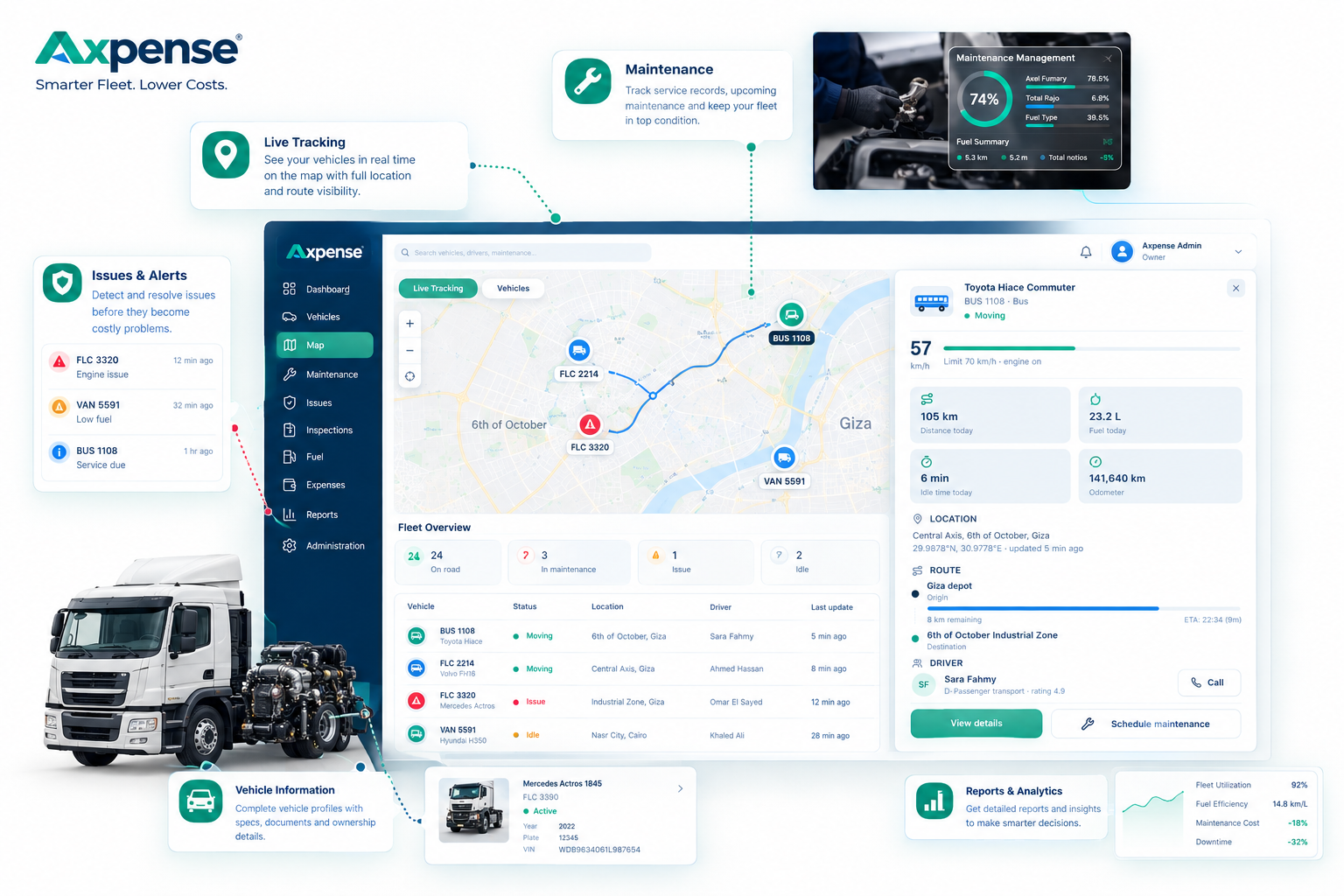
A modern fleet management platform should give you: live GPS tracking, automated dispatch assignment, unified driver-to-dispatch communication, one-click reporting, and the ability to scale without adding headcount just to manage the software itself.
How Qncept Approaches This
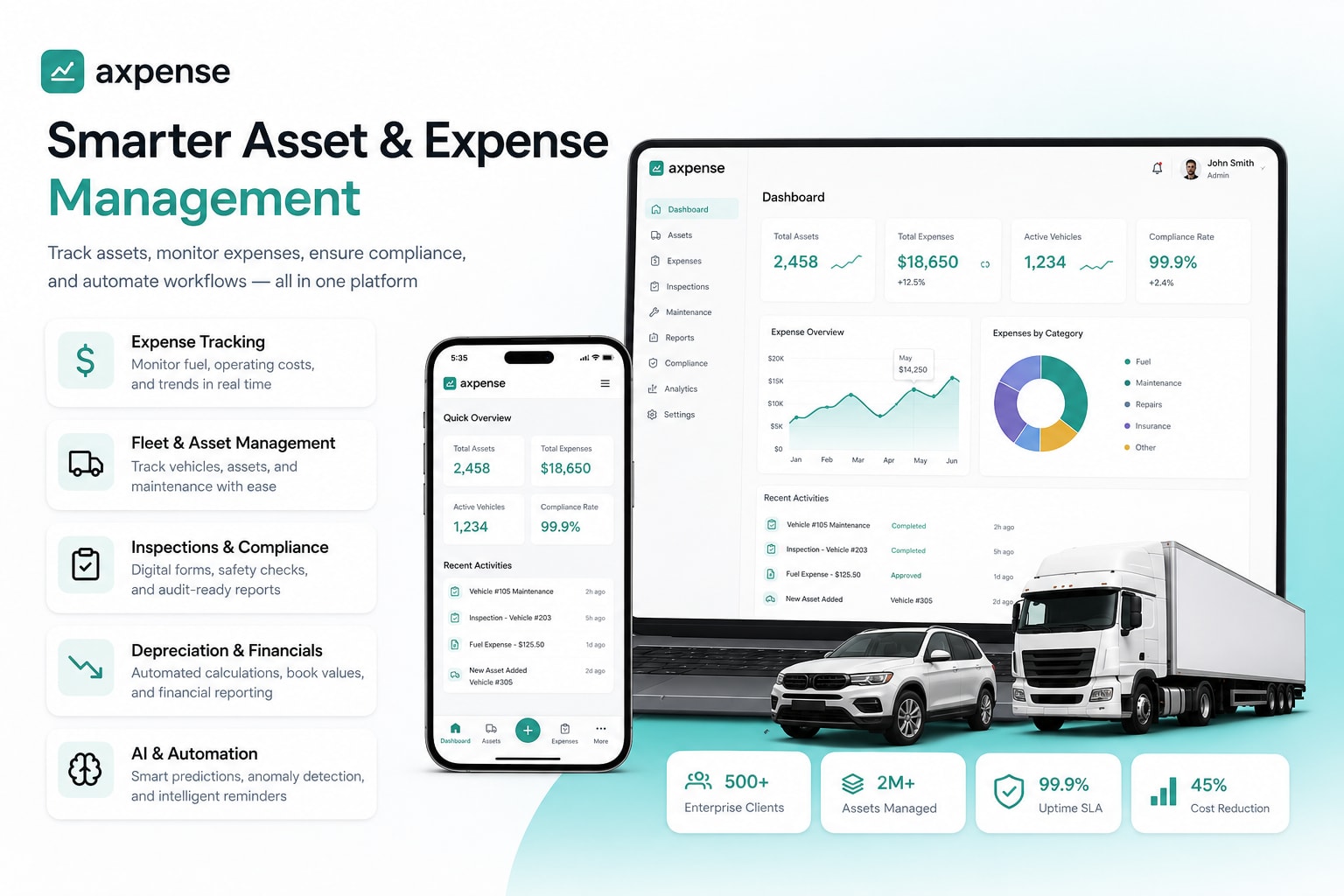
Qncept built Axpense, a logistics fleet management platform, specifically to address these gaps — replacing spreadsheet-and-phone-call dispatch with real-time tracking and automated workflows.
FAQ
Q: How do I know if my logistics software is actually the problem, not my process? If your team is building manual workarounds (side spreadsheets, WhatsApp groups) to compensate for what the software can't do, that's a strong sign the software itself is the bottleneck.
Q: Is it worth switching logistics systems mid-year? Switching costs are usually recovered within a few months if the current system is causing missed deliveries or requiring significant manual workaround time — the longer you wait, the more that cost compounds.
Q: Can a new system integrate with our existing accounting/ERP tools? Modern logistics platforms are typically built to integrate rather than replace your full stack — this should be confirmed during the evaluation, not assumed. Axpense.net