The Problem
Fleet-based businesses — logistics companies, distribution operations, construction fleets, corporate vehicle pools — typically run their operations across spreadsheets, shared documents, messaging apps, and disconnected point tools. This fragmentation creates specific, recurring operational gaps:
No consolidated view of total vehicle operating cost Preventive maintenance tracked manually, with activities and reminders regularly missed Fuel and expense data recorded by hand, disconnected from vehicle or mileage data No centralized record of vehicle inspections Vehicle and equipment lifecycle (acquisition → depreciation → replacement) tracked informally or not at all Limited reporting, making cost analysis and budget control difficult Administrative overhead consuming time that should go to fleet operations
Qncept's brief was to design a single SaaS platform that could replace this fragmented process — flexible enough to serve multiple industries and fleet structures, not just one type of operation.
Technical Approach Architecture
Axpense was built as a multi-tenant SaaS application, meaning a single platform serves multiple organizations while keeping each organization's data fully isolated. Core architectural decisions:
Multi-tenant design with tenant data isolation — each organization's fleet data is logically separated within a shared platform Role-based authorization — access to vehicles, financials, and workflows is scoped by user role within each organization API-driven backend — business logic is exposed through APIs, decoupling the backend from the frontend and supporting future integrations Relational data modeling — vehicles, drivers, maintenance records, work orders, parts, fuel logs, and expenses are modeled as interconnected entities rather than isolated records, so a single vehicle's full history — cost, service, inspection, assignment — can be reconstructed from linked data Modular business architecture — each functional area (maintenance, expenses, inspections, assignments) is built as a distinct module that shares the same underlying data model, rather than a monolithic set of screens Information architecture
Rather than building a set of disconnected admin screens, Qncept structured the product around how fleet teams actually work, with data flowing in this sequence:
Organization → Vehicles → Drivers → Maintenance → Work Orders → Parts → Fuel → Expenses → Inspections → Assignments → Budgets → Reports
This ordering matters technically as well as visually: it reflects the relational structure underneath — a work order references a vehicle and a maintenance schedule; an expense can trace back to a work order or a fuel transaction; a budget aggregates expenses across a fleet segment.
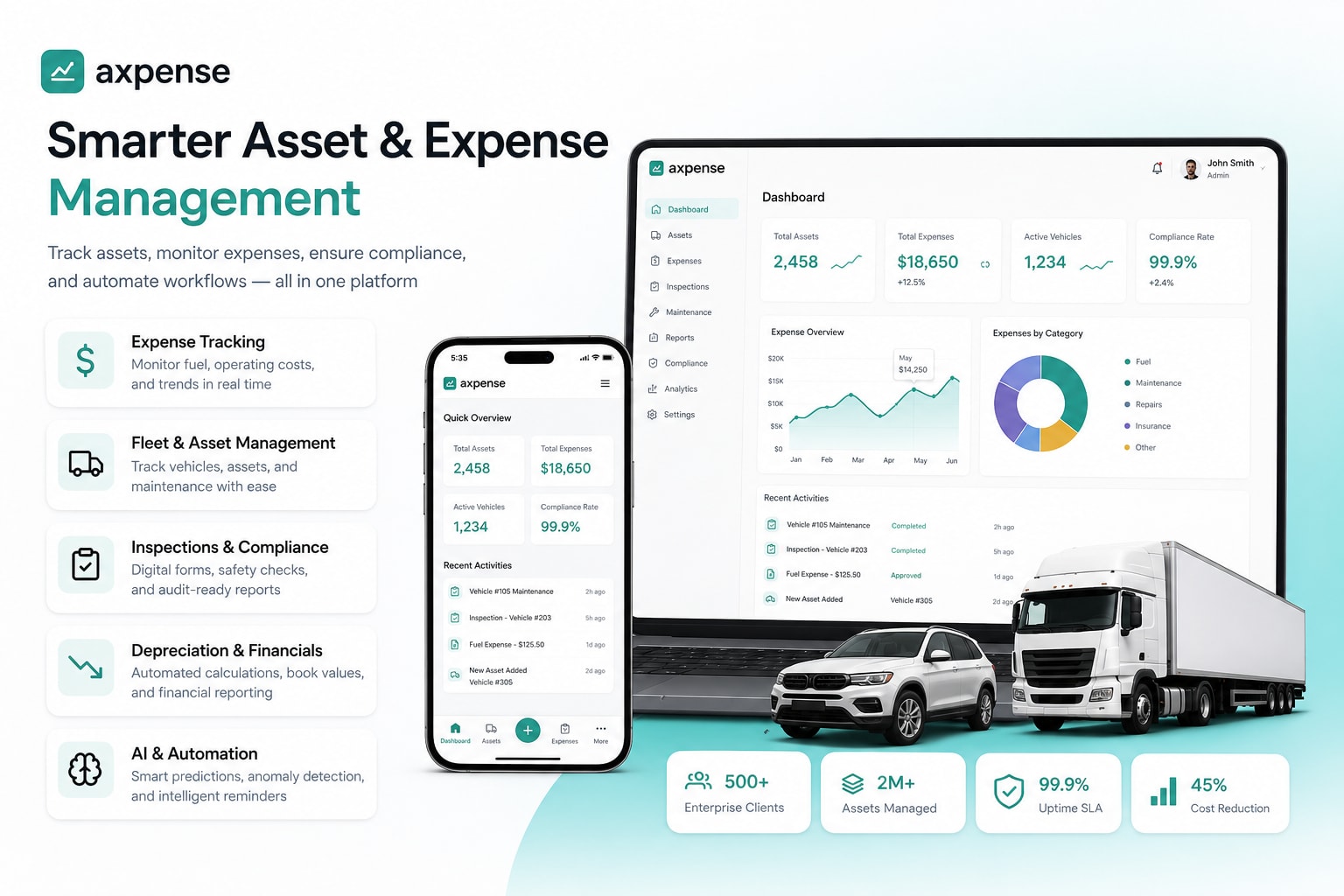
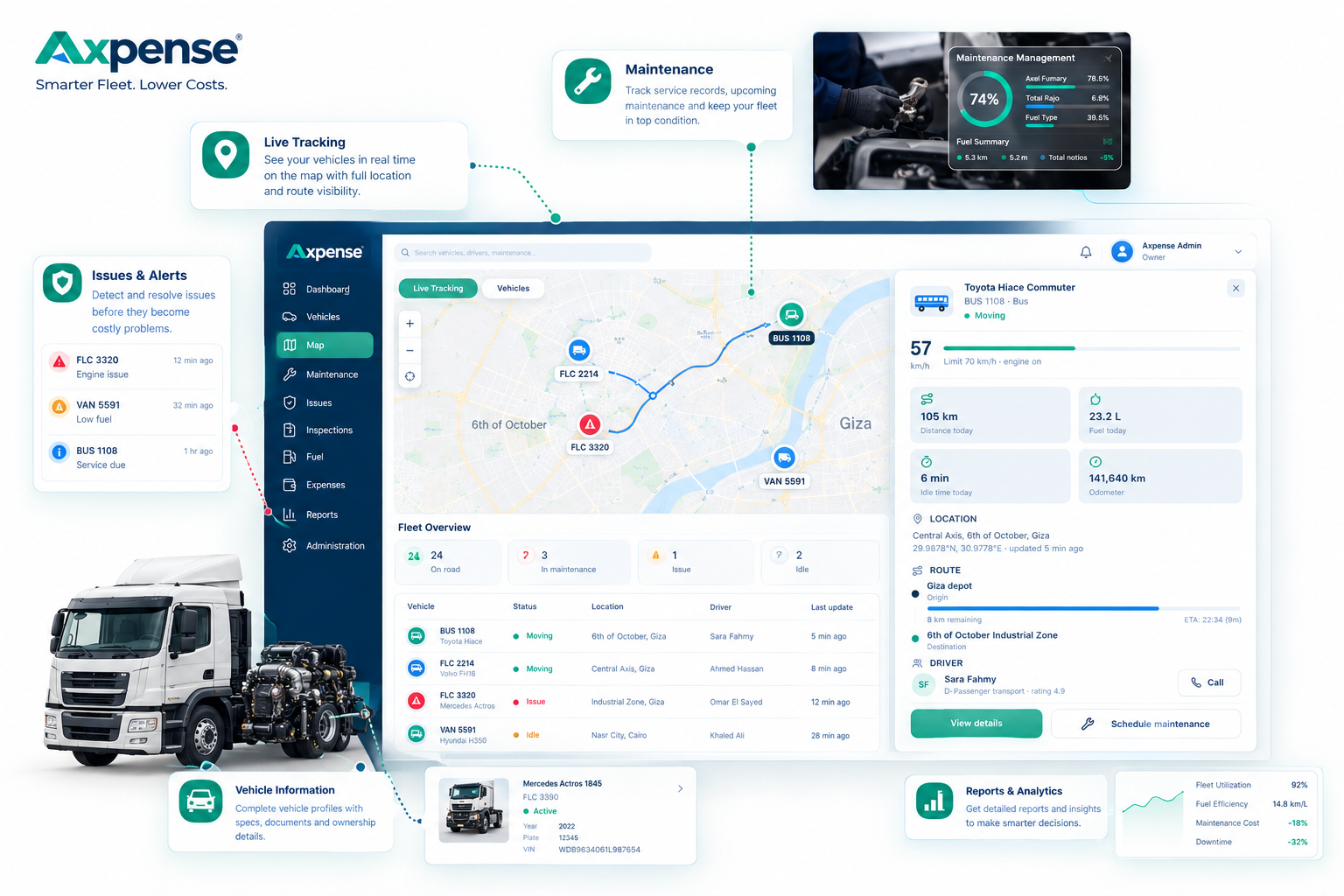
Core modules built Vehicle management — full vehicle records (VIN, registration, model, ownership, purchase data, odometer, depreciation, lifecycle status, replacement planning) Fleet expense management — centralized tracking of maintenance, fuel, parts, and operating costs Fuel management — fuel transactions tied to vehicle and mileage data for accurate cost-per-mile analysis Preventive maintenance — scheduled intervals, upcoming activity tracking, service history, automated reminders Work orders — repair/service tickets linked to vehicles, maintenance schedules, parts, and expenses Inspections — structured checklist-based inspections with pass/fail results, failure reasons, notes, and supporting images Driver management — driver records associated with vehicles and operational activity Parts management — inventory linked to maintenance and work order consumption Assignments — scheduling that connects vehicles, drivers, and operational tasks Dashboards & reporting — operational visibility into expenses, maintenance status, vehicle status, and budget utilization UX approach
The interface was designed around clear navigation, structured dashboards, reusable components, consistent forms, filterable data tables, status indicators, and defined empty/loading/error states — prioritizing daily usability for fleet managers and operations staff over a purely administrative CRUD layout.
Outcome
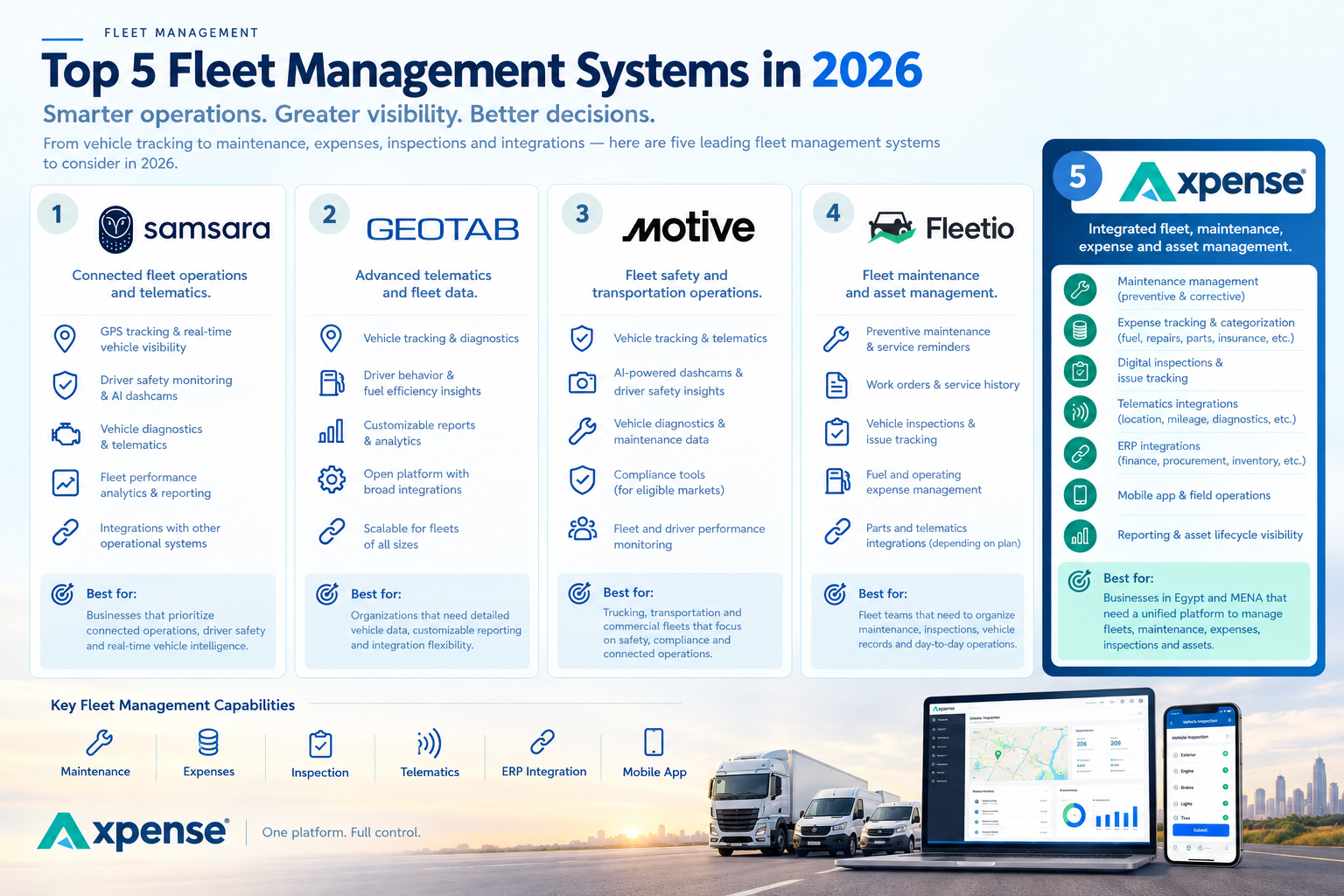
Axpense gives fleet-based organizations a single system of record for the operational and financial sides of running a fleet — vehicles, drivers, maintenance, inspections, fuel, expenses, parts, assignments, and budgets — replacing the spreadsheets and disconnected tools that previously held this information apart.
Because the platform is multi-tenant by design, it serves organizations across multiple sectors — logistics and transportation, supply chain, construction, oil & gas, real estate, healthcare, corporate fleets, and field services — from one codebase, rather than requiring a rebuild per industry.
Qncept's Role
Qncept led the full product development lifecycle: product discovery and requirements, product and SaaS architecture, database and data modeling, backend and frontend development, API architecture, authentication and authorization, and the design of maintenance, expense, and reporting workflows specifically.
Frequently Asked Questions
What is fleet management software? Fleet management software centralizes vehicle records, maintenance schedules, fuel and expense tracking, inspections, and driver assignments into one system, replacing manual, spreadsheet-based tracking with structured digital workflows.
What makes a fleet management platform multi-tenant SaaS? A multi-tenant SaaS platform serves multiple separate organizations from a single application instance, with each organization's data logically isolated — allowing one codebase to serve many customers instead of a separate deployment per client.
What industries can use a platform like Axpense? Any organization operating vehicles or equipment assets — logistics, construction, distribution, oil & gas, real estate, healthcare, corporate fleets, and field services — can use a fleet and asset management platform structured this way.
Qncept designs and builds custom software, SaaS platforms, and business automation systems. This case study covers Axpense, a fleet and expense management platform built by Qncept.